
 Rebecca MacFarlane
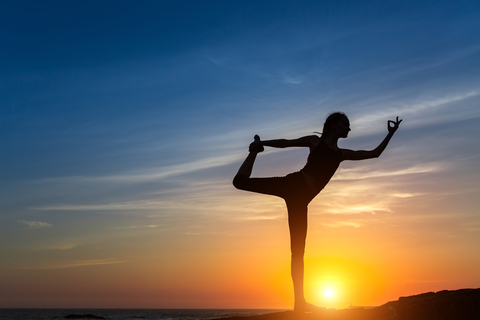
Yoga and Meditation have been practiced for thousands of years. So as we concern ourselves with our health through our diet, so we should concern ourselves with our health through our daily practices. Yoga and Meditation promote an all-round health for the Body, Mind and the Soul. The benefits of both are profound, and modern medical science is only just beginning to catch up to what Yogis have been telling us for centuries.
Among other benefits, a daily routine of Yoga and Meditation will help improve flexibility, strengthen the core and spine, boost your serotonin levels and balance out your mood, calm your mind and aid you in managing the stress of day to day life.
Bone weakness plagues many people today, and is largely caused by a lifestyle centred around sitting in chairs for hours on end and a general lack of exercises that focus on stretching out the muscles and building bone density. This weakness, especially in the spine, leads to ailments such as osteoporosis in later life. Yoga is a brilliant way to ensure that your bones remain supple and healthy as you age. Studies have been conducted recently that have illustrated this profound benefit of Yoga. Dr Loren Fishman of Manhattan Physical Medicine attests to the benefits of Yoga in preventing osteoporosis and other ailments, stating to the Huffington Post that she knows these benefits to be fact.
However, Yoga was never meant to be a solely physical practice. Whereas the physical benefits are numerous, there is so much more to the practice than meets the eye. It is a movement Meditation to cleanse and focus the Mind and the Soul. Through the almost geometric Poses, to the tuning of the breath and stilling of the Mind, Yoga is a Divine Meditation that causes the Mind to blossom like the Rising of the Sun brings the Blossoming of the Lotus Flower.
Neuroscientists have recently discovered that these benefits are very real. Yoga has a direct effect on the functioning of the brain, because it directly affects our neurotransmitters. Californian Neuroscientist Alex Korb who writes for Psychology today has delved into these neurological benefits of Yoga and explained exactly what takes place in your brain when you perform it. He mentions this in his book “The Upward Spiral: Using Neuroscience to Reverse the Course of Depression, One Small Change at a Time.” Yoga can greatly benefit those who suffer from Depression and Anxiety when practiced regularly, through the changes in neural activity.
As well as changes in neural activity, the practice of Yoga also boosts serotonin levels, the hormone responsible for regulating your mood and reducing stress.
Stress Management is another huge benefit of Yoga and Meditation. To be able to still the mind in a stressful situation is invaluable in helping you to tackle life’s challenges in a calm and collected way. The Ancient Tibetan Monks were masters of stilling the mind under stressful circumstances, and they achieved these serene states of mind through Yoga and Meditation. A Tibetan Monk could stand beneath a freezing waterfall in the dead of Himalayan Winter and be completely calm. He could actually control his body’s response to the cold through intense focus. He could endure physical pains and not flinch, because his mind was stilled and focused. Disciplined through years of Meditation. These are feats many consider superhuman, and are a result of the mental training that Yoga and Meditation can bring to the mind.
Perhaps you won’t be standing beneath an icy cold waterfall somewhere in the Himalayas, but it certainly could benefit you on a stressful day at the office when you need to focus all of your attention on work.
So now that you have decided to begin Yoga, its time to decide how to do it.
There are many branches of Yoga. Hatha Yoga (the most commonly practiced), Kundalini Yoga, Ashtanga Yoga- and the list goes on. Some are more physically trying than others, and it’s always best to feel it out and find the style that suits you and your body best. Most important, start slowly and go at a pace your body is comfortable with. You will slowly build your flexibility as you practice. Never try to force your body into a position it cannot handle, as this can lead to injury. Yoga should feel strenuous, but it should not feel unbearable. Rather ease in. The more your body strengthens, the easier the difficult poses will become. There’s no rush. It took me a while to build up my flexibility through Yoga. I kid you not, before I started, I was so inflexible I could not even touch my toes without bending my knees. But through regular Yoga, I now can, and it is getting easier and easier.
A routine of Yoga and Meditation in the morning and evening will do wonders in your life. Not only will it have you feeling physically refreshed, but mentally calm and focused as well.



Pingback:Bring the Gym to you with these effective at Home Exercises – eaglemedia.co.za