
 Eagle
Eagle
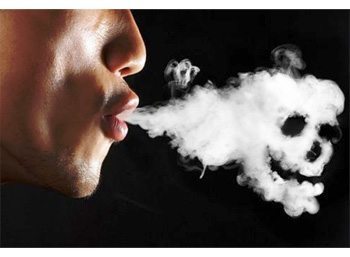
Tobacco use is a global epidemic among’st young people, as with adults and it poses serious health threats to the youth and young adults. It has significant implications for nations public and economic health in the present and future. Most young smokers are likely to become adult smokers and one half of these adult smokers die prematurely from tobacco-related diseases. Despite the thousands of programs designed to reduce youth smoking along with hundreds of thousands of media stories on the dangers of tobacco use, generation after generation continue to use this deadly product and family after  family are forced to suffer the devastating consequences.
Smoking has thus been considered a true addiction and is widespread throughout the world. The habit has become socially acceptable amongst adults of both sexes in society and this has an impact on the youth, for various reasons one of them being to improve their social status. Cigarette smoking has been considered one of the major public health hazards in the world. It has been the main cause of untimely deaths, morbidity and morality worldwide. Around 5 million deaths occur annually due to smoking cigarettes and if this pattern continues at the same pace as today, the morbidity and morality rates would have doubled.
The following are compounded in cigarettes, benzene (paint), formaldehyde (embalming fluid), ammonia (hair dye, toilet cleaner, etc), acetone (nail polish remover), tar, nicotine (insecticide/ addictive), carbon monoxide (automobile exhaust), arsenic, and hydrogen cyanide (poisons). Do any of these ingredients sound like something you should be inhaling? The chemicals contained in cigarettes according to US Department of Health and Human Services are not something people should ever inhale. People therefore do not realize what a cigarettes actually consists of and how much poison is being put into ones system when smoking.
Cigarettes also contains carcinogens, which are cancer causing, smoking accounts for nearly 90 percent of lung cancer deaths worldwide. Additionally, those who smoke are at risk of cancers of the larynx, oral cavity, esophagus, bladder, kidney, and pancreas.
As health practitioner Fagerström accounts, “While some negative health effects of smoking manifest slowly over time, others can be measured almost immediately.” The immediate effects of the sticky brown tar leave yellow stains on ones teeth and fingers, whilst the lungs cells causing the cells to die absorb some of the inhaled tar. Tar correspondingly damages the cilia in the upper airways that protect one against infection. The nicotine in cigarettes causes arteries to constrict and consequently lowering skin temperature and reducing the blood flow to ones hands and feet.
One third of smoking – related deaths are caused by the obstruction of the chronic airway and by coronary heart disease. The smoking of cigarettes includes carbon monoxide. Carbon monoxide is the replaces the oxygen in the blood stream during smoking. Jones gives an example, of how the nicotine in tobacco combined with the carbon monoxide in the tobacco smoke causes the damage of the lining of blood vessels and make blood platelets much stickier. The platelets form part of what contributes to the development of heart disease. Smoking causes a person’s heart to run on overdrive and ultimately leads to the shortage of oxygen to the heart. The heart then has the job of working extra hard to maintain oxygen to be supplied to the entire body. The blood vessels are thus narrowed causing high blood pressure, affecting the cardiovascular system of human beings causing a rise in high blood pressure or hypertension.
Not only does smoking cause effects on ones own health, but also when one smokes during pregnancy it restricts the overall nutrition a newly born baby is able to receive. This is specifically detrimental in late pregnancy when the brain of the baby is swiftly developing and thus evidence from the World Health Organization has suggested that nicotine has a direct adverse effecting on the developing never cells. A study of small doses animals injected with nicotine of mothers whom were pregnant normally resulted in brain malformations, learning problems and poor functioning.
Even nonsmokers are at the risk from those who smoke, recent research done at the Medical Institute at Stanford have focused on the effects of the environmental tobacco smoke, that is the effect of tobacco on nonsmokers who have to share the same environment with a smoker. Secondhand smoke has the power to aggravate asthma, pneumonia, and bronchitis, and impair blood circulation.
So what happens when the smoking habit is kicked to the curb, studies of former smokers have shown that their risk of dying from smoking – related diseases decrease with each year they abstain from smoking. . According to the World Health Organization (WHO), “smokers who quit smoking before the age of 50 reduce their risk of life-threatening disease by half after just one year, compared with those who continue smoking.” The other benefits of quitting smoking include a more disposable income, an admission to social activates and institutions that ban smoking. However it is not the easiest thing to quit smoking, it can be very difficult, this is most likely due to smokers craving the effect of the nicotine in the smoke.
There is however a number of nicotine replacement products to aid in helping a person quit smoking. There are nicotine patches and nicotine-containing adhesive disks that are placed on the skin and are known to be very helpful. When the nicotine is placed on the skin is its slowly absorbed and then entered into the bloodstream.
Also available by prescription from your local general practitioner is a nicotine inhaler that looks similar to a cigarette and when puffed, the inhaler then releases nicotine into the mouth. Furthermore the approach of combining three different smoking cessation therapies has found to be a great success. This approach combines the use of an antidepressant drug called bupropion, combined with a replacement product and counseling. This combination approach has achieved great milestones today and is an effective treatment in helping one quit.
Quitting smoking has been made possible with all the scientific innovations that aim to simplify it for you and to make one realize the true reality of such a habit. as Brooke Shields once said, “Smoking kills. If you’re killed, you’ve lost a very important part of your life.” So will you put that cigarette out for good?